Urdu emerged in northern India from local Indo-Aryan speech, enriched by Persian and Arabic and influenced by the Turkic world, reaching literary maturity in the eighteenth century. It was refined in royal and aristocratic courts and, above all, by its poets.
Urdu absorbs foreign vocabulary, has an enormous store of rhymes and synonyms, and gives poets freedom to create new words and compounds. A single couplet can hold a lifetime of longing, doubt or defiance. Its words travel easily from the page into song and memory.
In Pakistan, schoolchildren, bus drivers and corporate executives recite Urdu poetry in everyday conversation. A couplet can make an argument, express a feeling or simply say what ordinary words cannot. In fact, I attended my first Urdu poetry recital in the seventh grade.
With such an abundance of poetry and poets—from the street worker to the university professor, from the political revolutionary to the lovelorn—choosing five is an unfair exercise, and any reader of Urdu will have a different list. These are the five I return to most, counted down from five to one.
5. Parveen Shakir24 November 1952 – 26 December 1994
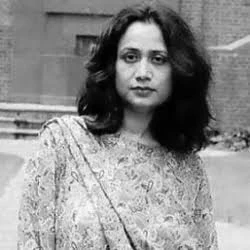
Much of the classical Urdu ghazal (a love poem in rhyming couplets) spoke about the beloved while leaving her own perspective unheard. Parveen Shakir brought a woman’s longing into the foreground. In barely two decades she became one of the form’s most distinctive female voices: tender, wry, wounded and entirely unafraid.
She was born in Karachi in 1952 into a family that had come from Bihar, and she began writing poetry as a schoolgirl. She studied English literature and linguistics at the University of Karachi, taught English at a college for nine years, and then passed Pakistan’s civil service examination and joined the Customs service. Later she studied public administration at Harvard. She was, in other words, a scholar, a teacher and a senior civil servant, and the poet in her grew alongside all three.
Her first collection, Khushbu (Fragrance), appeared in 1976, when she was twenty-four, and won the Adamjee Award. Sad-barg (Marigold, literally “a hundred petals”), Khud-kalami (Talking to Myself) and Inkar (Refusal) followed, and her work was gathered in Mah-e-Tamam (The Full Moon). Her ghazals are full of fragrance, rain, flowers and wind, but beneath the softness is a sharp intelligence. One of her best-known ghazals, which I have translated as Petal to Petal, opens:
Ku-ba-ku phail gai baat shanasai ki
Us ne khushbu ki tarah meri pazirai kiPetal to petal, spore to spore; rumours of love, spread, door to door
Like the sweet scent of a blooming rose; he courted me, ever so slow
Her contribution was to turn the ghazal’s gaze around. In her verse the woman is the one who desires, waits, remembers and is betrayed, and she writes about it with honesty and humour. She brought in the textures of ordinary life, including words borrowed from English, and wrote equally of love, of motherhood and of loneliness. For millions of women across South Asia, she put into Urdu what they had felt but had never seen written. For the world, she showed that one of its oldest poetic forms was not a closed museum but a living room, with space for a new voice.
She is at number five only because her life was so short. Parveen Shakir died in December 1994 in Islamabad, the city where I grew up. She was forty-two, an age when most Urdu poets are only entering their prime. Her body of work is smaller than that of the poets above her, and she did not live to reach the full range they reached. But no list of mine could leave her out, and her place on it is a beginning, not a footnote.
4. Mir Taqi MirFebruary 1723 – 20 September 1810
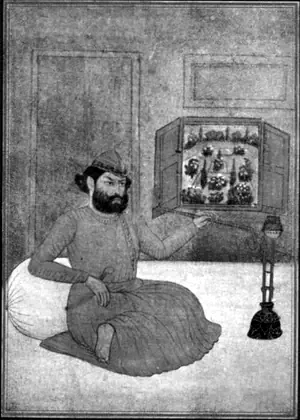
If Urdu poetry has a heartbeat, it is Mir’s. More than two centuries after his death, he is still called Khuda-e-Sukhan (God of Poetry), and no poet in the language has written about grief and love with more purity.
Mir was born in 1723 in Agra, in present-day India, the son of a Sufi who taught him that love is the essence of all things. His father died when he was still a boy, and he made his way to Delhi, where he was educated in the household of the scholar and poet Khan-e-Arzu. His youth was marked by poverty, family quarrels and, by his own account, a period of breakdown. He lived through the collapse of Mughal Delhi, the invasion of Nadir Shah and the raids that followed, and saw the city he loved plundered more than once. In 1782 he left for Lucknow, where he spent his last decades under the patronage of its nawabs (Mughal-era governors), and he died there in 1810.
His legacy includes six collections of Urdu ghazals, along with long narrative poems and an autobiography in Persian, Zikr-e-Mir (Remembering Mir). His language is simple, almost conversational, and that is its power:
Patta patta boota boota haal hamara jaane hai
Jaane na jaane gul hi na jaane, baagh to saara jaane haiEvery leaf and every bud knows the state I am in
Only the rose does not know, or will not; the whole garden knows
Mir’s unique contribution was to make Urdu, still called Rekhta (literally “mixed”) in his day and considered less refined than Persian, into a language fit for the deepest feeling. He set the idiom, the moods and the music that later poets inherited, and he showed that the ruin of a city could be felt as the ruin of a heart. Even Ghalib, who rarely admitted a rival, bowed to him:
Rekhte ke tumhi ustad nahin ho Ghalib
Kehte hain agle zamane mein koi Mir bhi thaYou are not the only master of Rekhta, Ghalib
They say that in an earlier age there was one called Mir
He stands at number four because, in purity of feeling, he may have no equal, but his world is mostly one of sorrow. The three poets above him widened what Urdu poetry could hold, carrying it into politics, philosophy and the questioning of the self. Mir perfected the voice of the heart; they gave that voice new things to say.
3. Faiz Ahmed Faiz13 February 1911 – 20 November 1984
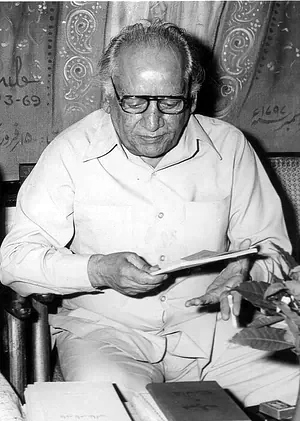
Faiz took the ghazal out of the garden and into the street, the prison and the protest. He wrote in the classical vocabulary of wine, the beloved, the night and the gallows, and made it speak of injustice, exile and hope.
He was born in 1911 near Sialkot, and as a boy learned Arabic and Persian alongside his schooling. He studied at Murray College in Sialkot and at Government College in Lahore, and took master’s degrees in English and in Arabic. While teaching at a college in Amritsar he came into contact with the Progressive Writers’ Movement, which shaped the rest of his life. During the Second World War he joined the army and rose to lieutenant colonel. After Partition he edited The Pakistan Times, until in 1951 he was arrested in the Rawalpindi Conspiracy case and spent four years in prison. He later lived in exile in Beirut, editing the journal Lotus, and died in Lahore in 1984.
For Faiz and Iqbal, poetry and the desire to change society were inseparable. For both, the poem was a tool for changing society. Faiz was a committed communist all his life, and he paid for it with prison and exile, but he never stopped writing for the worker, the prisoner and the dispossessed.
Some of his finest collections, Dast-e-Saba (The Hand of the Breeze) and Zindan Nama (The Prison Book), were written in prison. His most famous early poem asks the beloved not to expect the old love from him, because the world’s suffering has claimed a share of his heart. His most famous call to courage is Bol (Speak), which I have translated:
Bol ki lab azaad hain tere
Bol zabaan ab tak teri haiSpeak! For your lips are free
Speak! It’s your destiny
Decades after his death, his poem Hum Dekhenge (We Shall See) is still sung at protests on both sides of the border.
His unique contribution was to fuse the classical and the political so completely that the beloved in his poems might be a woman, a homeland or freedom itself, and the reader could rarely be sure which. That ambiguity let his poems survive censors and prisons, and it gave them a second life in every generation that needed them. He was awarded the Lenin Peace Prize in 1962 and is read and sung far beyond Pakistan, as a poet not of one nation but of anyone denied a voice.
He is at number three because, though he is the modern Urdu poet closest to my heart and the one I have translated most, his genius builds on forms that the two poets above him did more to shape. Faiz made the tradition speak to our time; Iqbal and Ghalib changed what the tradition itself could be.
2. Muhammad Iqbal9 November 1877 – 21 April 1938
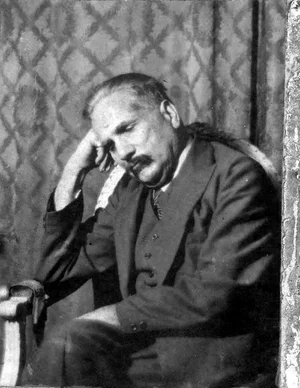
Iqbal was a philosopher-poet: a thinker first, who made poetry the vehicle of his ideas. Yet the verse he chose to carry his thought turned out to be as beautiful as the ideas it expressed. He is the national poet of Pakistan, but his reach goes far beyond any one country: he wrote to awaken the individual, and through the individual, a whole civilisation.
He was born in Sialkot in 1877, the same city as Faiz, and was taught there by the scholar Mir Hasan, who introduced him to Persian and Arabic poetry. At Government College in Lahore, where Faiz would study some three decades later, he studied philosophy under Thomas Arnold, and he went on to Trinity College, Cambridge, to a doctorate in Munich on metaphysics in Persia, and to the bar at Lincoln’s Inn in London. He returned to Lahore in 1908, practised law, taught philosophy and was knighted in 1923. He died in Lahore in 1938, nine years before Pakistan came into being.
Like Faiz, Iqbal used poetry for a larger purpose. His aim was a revival of Islamic thought, joined to the philosophy of modern Europe. He was deeply influenced by German thinkers: Goethe, Kant, Hegel and above all Nietzsche, alongside the French philosopher Henri Bergson. From that meeting came the ideas at the heart of his poetry: khudi (selfhood); the shaheen (falcon), imagined in his poetry as soaring high and refusing the comforts of a nest; and the qalandar (free-spirited dervish), who bows to no worldly power. He was active in politics too. He sat in the Punjab Legislative Council, and in 1930 he presided over the All-India Muslim League’s Allahabad session, giving the address that imagined a Muslim homeland in north-western India.
He wrote in both Urdu and Persian and, much like Ghalib, more in Persian than in Urdu: of the roughly 12,000 verses he left, some 7,000 are in Persian. His major Urdu collections are Bang-e-Dra (The Caravan Bell), Bal-e-Jibril (Gabriel’s Wing) and Zarb-e-Kalim (The Rod of Moses); in Persian he wrote Asrar-e-Khudi (The Secrets of the Self), Payam-e-Mashriq (A Message from the East), his reply to Goethe, and Javid Nama (The Book of Eternity), a journey through the heavens with Rumi as his guide. In Shikwa (The Complaint), he dared to remonstrate with God Himself in verse, asking why the faithful had been forsaken; a few years later, in Jawab-e-Shikwa (The Answer to the Complaint), he let God answer, and the reproach came back to rest on the believers.
His unique contribution was a philosophy of the self: self-respect and self-realisation, set against fatalism and resignation. He brought Rumi into conversation with European thought, and the East into conversation with the West, at a time when many believed the two could only be rivals. For the world, he is the poet who argued that faith and reason, tradition and modernity, need not be enemies, and that dignity begins with the self.
Ironically, he did not think of himself as a poet. In a letter, he insisted: “I have never considered myself a poet. Therefore, I am not a rival of anyone, and I do not consider anybody my rival. I have no interest in poetic artistry. But, yes, I have a special goal in mind for whose expression I use the medium of poetry considering the condition and the customs of this country.” He expressed the same conviction in a Persian poem titled Chand ba rooy-e khud kashi (How long?), from Zaboor-e-Ajam (The Psalms of Persia), published in 1927:
Naghma kuja o man kuja, saaz-e-sukhan bahana ist
Sooy-e-qataar meekasham, naqa-e-bee-zamaam raWhat have I to do with song? Verse is only a means—
I draw the unbridled camel towards the caravan.
He is at number two. In range of thought he certainly stands above every poet on this list. But Iqbal’s poetry often carries a message, while the poet at number one carries a question, and it is the questions I find myself returning to.
1. Mirza Ghalib27 December 1797 – 15 February 1869
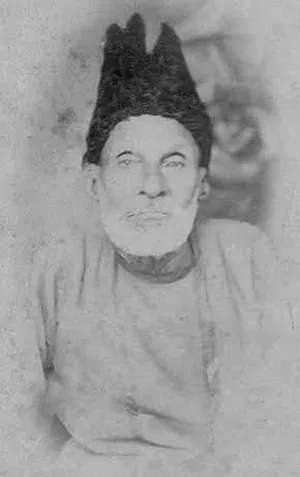
Of all the poets in any language, Ghalib is the one I return to most. The title of my novel, A Children’s Playground, comes from one of his couplets, and he has kept me company through every country I have lived in.
He was born Mirza Asadullah Baig Khan in 1797 in Agra, in present-day India, into a family of Turkish descent with a tradition of military service. His father was killed in battle when he was about five, and the uncle who raised him died a few years later. He grew up in his mother’s family home, was schooled in Persian and Arabic, and fell in love with Persian poetry long before he wrote in Urdu. At thirteen he was married and moved to Delhi, the city that would be his for the rest of his life. He first wrote under the name Asad and later took the name Ghalib, Arabic for “dominant” or “victorious”. None of his seven children survived infancy. He spent much of his life in debt, petitioning for a family pension, and in 1850 the last Mughal emperor, Bahadur Shah Zafar, appointed him to write a history of the dynasty. He lived to see Delhi destroyed by the ruling British in 1857, after the Indian Mutiny. He recorded it in a Persian diary, and died there in 1869.
His Urdu divan (collected poems), first published in 1841, is slim, barely 1,800 verses against more than 11,000 in Persian, and he considered his Persian work more important. Posterity disagreed. His Urdu ghazals are dense with wit, paradox and doubt, and his letters, written in an easy, conversational Urdu, are often called the beginning of modern Urdu prose. The couplet behind my novel’s title is one I have translated:
Bazeecha-e-atfal hai duniya mere aage
Hota hai shab-o-roz tamasha mere aageA children’s playground, the world before me
Nightly and daily, watching its pageantry
His unique contribution was to bring a modern, questioning mind into a classical form. Ghalib argued with fate, with God, with his beloved and with himself, often in a single couplet and usually with a smile. He made the ghazal a place for philosophy as well as feeling, and for doubt as well as devotion. For the world, he is the poet of the unanswerable question, and that is why he travels so well: every reader, in every century, can find in him their own uncertainty, stated more beautifully than they could manage.
If Iqbal was the philosopher-poet, Ghalib was the poet-philosopher: he had no system to teach, only questions he could not stop asking. Unlike Faiz and Iqbal, he was no activist. He led no movement, held no political office and had few accomplishments outside his poetry. His excellence rests on one thing alone: his command of the written Urdu word, greater than that of any Urdu poet before or since.
Ghalib struggled with financial ruin and lived under the weight of social judgment. His letters reveal a man worn down by debt and grief, perhaps even by depression. That anguish finds a defiant voice in his famous ghazal Dil Hi To Hai (’Tis My Heart). The opening couplet turns pain into a protest: a heart is neither brick nor stone, so why should it be expected to endure suffering without tears? Read against the losses and loneliness of his life, it becomes an assertion of the right to grieve without shame. Sorrow here is no passing phase to be overcome, but part of human existence. He may weep a thousand times, yet he still asks why anyone should torment him further.
Dil hi to hai na sang-o-khist, dard se bhar na aaye kyon?
Royenge hum hazaar baar, koyee hamein sataye kyon?‘Tis my heart, not brick, nor stone; weeps like others; don’t you know?
It will cry, a thousand times; why, do you, torture it so?
He is at number one because every other poet on this list is in conversation with him. He bowed to Mir; Iqbal wrote a poem in his honour; Faiz inherited his imagery and his irony; and Parveen Shakir wrote within the form he deepened. Ghalib looked at the world and saw a children’s playground, a spectacle unfolding night and day, and somehow made that both a lament and a consolation. I have not found a better description of life since.