Punjabi is my mother tongue, and its poetry was sung long before it was written down. As a literary language it is much younger than Persian but far older than Urdu: its poetry begins with Baba Farid, some eight centuries ago, long before Urdu found its voice. And where Urdu was polished in the courts of emperors, often in their praise and now and then in flattery, Punjabi grew up in the farmlands. Its vocabulary is plainer, but its wisdom is more direct. It belongs to shrines and village gatherings, to weddings and to farewells, and its greatest poets were often mystics who refused to separate the love of God from the love of people. Urdu poetry taught me refinement; Punjabi poetry taught me honesty. These are the five Punjabi poets I return to most, counted down from five to one.
5. Shiv Kumar Batalvi23 July 1936 – 6 May 1973
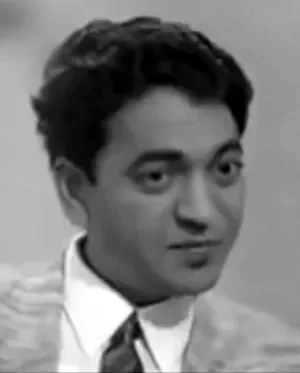
Shiv Kumar Batalvi was the poet of longing. Amrita Pritam called him Birha da Sultan (Sultan of Separation), and no modern Punjabi poet has written about loss with such sweetness and such pain.
He was born in 1936 in a village near Shakargarh, in what is now Pakistan, and his family moved to Batala in Indian Punjab after Partition, which gave him his name. His education was restless: he began degrees in arts, science and even engineering at several colleges, and finished none of them. He worked as a village revenue clerk and later in a bank, but poetry was the only work he truly did.
His collections include Piran da Paraga (A Basket of Sorrows), and in 1967 he became the youngest writer ever to receive the Sahitya Akademi Award, for Loona, a verse play that retells an old Punjabi legend from the point of view of its supposed villain, a young woman married to an old king. His songs are still sung across Punjab, among them this lament:
Ikk kudi jihda naam mohabbat
Gum hai, gum hai, gum haiThere is a girl whose name is Love
She is lost, lost, lost
His contribution was to bring the old Punjabi birha (the ache of separation) into modern life, and to make it personal. Where the Sufi poets longed for God, Shiv longed for a person, for youth, for a world that kept slipping away. Loona also showed a new sympathy: it gave a voice to a woman the old story had condemned. For readers far beyond Punjab, his songs became the sound of heartbreak itself.
He is at number five because his life was too short for the range of the poets above him. But he gave Punjabi poetry its most beautiful modern sorrow, and it would be a poorer language without him.
4. Amrita Pritam31 August 1919 – 31 October 2005
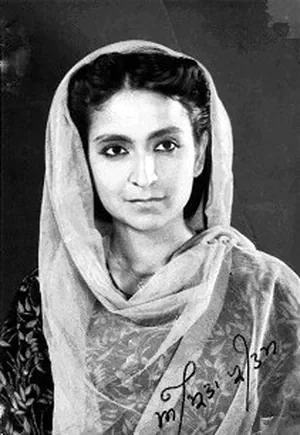
Amrita Pritam was the first great woman poet of Punjabi, and one of the bravest writers of the twentieth century. She wrote poetry, novels and memoir across six decades, and she wrote the poem that gave a voice to Partition.
She was born in Gujranwala in 1919, the daughter of a schoolteacher and poet who encouraged her writing. Her mother died when she was eleven, and she found refuge in words; her first collection was published when she was sixteen. In 1947 Partition forced her family from Lahore to India, and she spent the rest of her life in Delhi, writing and editing, and for many years working for All India Radio.
Her poem Ajj Aakhaan Waris Shah Nu (Today I Call Waris Shah), which I have translated, was written in 1948 on a train journey from Dehradun to Delhi, a year after she had fled Lahore, as she mourned the women of Punjab who had suffered in the violence of Partition. It calls on the poet at number one on this list:
Ajj aakhaan Waris Shah nu, kiton qabraan vichon bol
Te ajj kitab-e-ishq da koi agla varka pholToday, I call Waris Shah, “Speak from inside your grave”
And turn, today, the book of love’s next affectionate page
Her novel Pinjar (The Skeleton) told the story of a woman abducted during Partition, and her memoir Rasidi Ticket (The Revenue Stamp) spoke openly about love and freedom at a time when women were discouraged from speaking openly about either. She was the first woman to win the Sahitya Akademi Award and later received the Jnanpith Award, India’s highest literary honour.
Her contribution was to make Punjabi poetry speak for women, and to make it speak for both sides of a divided land. She was honoured in India and Pakistan alike, and her poem to Waris Shah is still recited on both sides of the border. Had she written only that one poem, it would have been enough for a lifetime. In a few verses it holds all of Punjab, its old joys and its new grief: the Chenab, one of its five rivers; Heer, its most beloved woman; Waris Shah, its most beloved poet; and Partition, its deepest wound. For the world, she showed how a poet can hold a nation’s grief without taking a side in its hatred.
She is at number four because the three poets above her built the house she lived in. Her greatest poem is, after all, an appeal to Waris Shah, and she wrote in a language that Farid, Bulleh Shah and Waris had made great.
3. Baba Faridc. 1179 – 1266
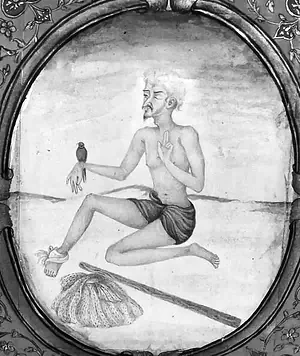
Baba Farid is where Punjabi poetry begins. Eight centuries ago, a Sufi saint chose to speak to ordinary people in their own language, and in doing so he became the first great poet of Punjabi.
Fariduddin Masud was born near Multan in the late twelfth century, into a family of scholars. His mother taught him prayer and devotion, and he was educated in Multan in the Quran, theology and Persian. There he met the Sufi master Qutbuddin Bakhtiar Kaki and followed him to Delhi as a disciple of the Chishti (Sufi) order. In time he settled at Ajodhan, now Pakpattan in Pakistan, where he lived simply among the poor, and where his shrine still draws pilgrims. He became known as Ganjshakar (Treasury of Sugar) for the sweetness of his words and his life.
His verses are short shaloks (couplets) of startling plainness about death, humility and longing for God. More than a hundred of them were included in the Guru Granth Sahib, the holy book of the Sikhs, compiled more than three centuries after his death. Among the most loved:
Kaga karang dhandholia, sagla khaiya maas
Eh do naina mat chhuhyo, pir dekhan ki aasO crow, you have picked my skeleton and eaten all my flesh
But do not touch these two eyes; they still hope to see my Beloved
Baba Farid’s contribution was to give Punjabi its first literature, and to make it a language of the spirit. His couplets are recited by Muslims at his shrine and sung by Sikhs in their gurdwaras (Sikh temples), a rare meeting of faiths in a single voice. For the world, he is proof that the simplest words, spoken with sincerity, can outlast empires.
He is at number three because, while he founded the tradition, the two poets above him carried it to its greatest heights: one in the boldness of his questions, the other in the scale of his storytelling.
2. Abdullah “Bulleh” Shah1680 – 1757
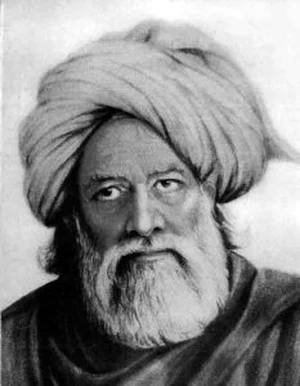
Bulleh Shah is Punjab’s rebel saint. He mocked the clergy, ignored the boundaries of caste and creed, and danced in the streets for his teacher. Three centuries later, his poetry is sung everywhere from village shrines to concert halls. He belongs to a long line of Sufis who lived along the Indus, from Punjab down to Sindh. Only a few of them wrote poetry, and those few are the ones history remembers best; Bulleh Shah stands at the top of that list.
No poet, in fact no philosopher, has shaped my own thinking and approach to life more than Bulleh Shah, a rural Sufi saint who spent his whole life in and around a small Punjabi town three centuries ago. He is close to my heart not only as a poet but as a spiritual guide, which may be why he takes up more of this page than anyone else.
I write my poetry under the pen name Bulleya, in his honour. In fact, I wrote the final draft of my novel under the name Abdullah Shah, another tribute to this remarkable man. I changed it to my own name only at the urging of reviewers, who felt that a novel born of such a personal journey of discovery should carry the name of the person who had made that journey.
Abdullah “Bulleh” Shah was born in 1680, probably in Uch in present-day Bahawalpur, Pakistan, into a respected family of Sayyids (descendants of the Prophet), and grew up near Kasur, where his father taught at the village mosque. He studied Arabic, Persian and theology, and was expected to become a learned man of religion. Instead he became the disciple of Shah Inayat Qadiri, a gardener by family trade and a Sufi master, to the outrage of his family, who felt a Sayyid should not bow to a man of lower status. He never married, and spent his life in and around Kasur, where he died in 1757. According to local tradition, his defiance of the clergy followed him to the grave: the orthodox mullahs of Kasur refused to give him a religious funeral or a place in the town’s graveyard, and he was buried outside the city. Ironically, the city of Kasur has since grown around his shrine, which now stands at its heart; history, in the end, sided with the poet the people loved, not the clerics who shut him out.
He wrote mostly kafis (short lyrics with a refrain), meant to be sung. His most famous asks the oldest question of all, and I have translated it:
Bulleh! ki jaana main kaun
Na main momin vich maseet aan, na main vich kufar diyan reet aanBulleh! To me, I am not known
Not a believer inside the mosque, am I, nor a pagan disciple of false rites
His contribution was to place love above ritual and the human heart above every label. He questioned religious hypocrisy, rejected the pride of birth and spoke of God as a friend to be found within, not a judge to be feared. Above all, he stood against self-righteousness, and his poetry returns again and again to two of its faces: the religious authorities, represented by the mullah (cleric), and the educated elite, whom he calls the qazi (judge). His kafis are sung by Punjabis of every faith, Muslim, Sikh, Hindu and Christian alike, and in every style. His poetry finds a home in qawwali—the devotional music of Sufi shrines—and travels far beyond it, through Sufi song, folk music, solo ballads and rock. Across these forms, his words continue to reach new listeners while retaining their spirit of love, defiance and longing.
At the heart of it all is the core Sufi belief: that to love humanity is to love God, and that God lives not in buildings or in books, but in human hearts. His verses are full of village wisdom that cuts across race, religion and caste, and they have found new life today among people looking for a universal ethics without leaving their own faith. For the world, he is one of the great voices of tolerance, a man who asked who he was and refused every easy answer.
If Amrita Pritam wrote my favourite poem in any language, Bulleh Shah penned my favourite couplet in any language:
Masjid dha de, mandar dha de; dha de jo kujh dhainda
Par kisi da dil na dhaween; Rabb dilaan vich rehndaTear down mosques, tear down temples; and all that stands besides
But never tear down a person’s heart; for that is where God resides
One of his most popular four-line stanzas is my favourite in any language. It turns to the Arab love story of Layla and Majnun: the seventh-century romance of the Bedouin poet Qays ibn al-Mulawwah and his beloved, Layla al-Amiriyah, in the Najd region of the Arabian Peninsula. Through their tragic story, it delivers a profound message about spiritual love and looking beyond the physical. Even the name carries the point: Layla means “night” in Arabic, the darkest of words, yet across the poetry of the East it has become synonymous with the most beautiful of women:
Keeta sawaal Mian Majnun nu, teri Laila te rang di kaali
Ditta jawaab Mian Majnun ne, teri akh na vekhan waali
Quran paak de warq ne chitte, utte likhi siyaahi kaali
Chhad ve Bulleya, jithe dil arr jaave, othe ki gori ki kaaliThey taunted Majnun: “Your Laila’s skin is black”
Majnun smiled: “It’s an eye for beauty that you lack
The Quran’s pages are white, yet black is its every mark
Let it go, Bulleya! Where hearts surrender, who cares if she is fair or dark?”
He is at number two because the poet at number one did something even Bulleh Shah did not: he wrote the epic of Punjab, the story through which a whole people still understands love.
1. Waris Shah1722 – 1798
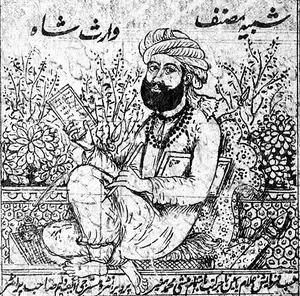
Waris Shah is the Shakespeare of Punjab. His Heer, the tragic love story of Heer and Ranjha, is the epic of the Punjabi language: a long tale told entirely in verse. For more than two centuries it has been recited, sung and quoted wherever Punjabi is spoken, becoming the best-known telling within an older Punjabi romance tradition and inspiring countless later retellings. The names themselves have entered the language: a Punjabi woman in love is a Heer, and a Punjabi man in love is a Ranjha.
Waris Shah was born around 1722 in Jandiala Sher Khan, near the Punjab town of Sheikhupura in Pakistan. He was educated in Kasur in religious learning and Persian. After years of wandering, he settled in the village of Malka Hans, near Pakpattan, where he lived in a small room beside the mosque. There, in 1766, he completed Heer, taking an old folk tale and turning it into a poem of extraordinary depth and detail. He died in 1798, and lies in a large tomb with a wide courtyard in his home town of Jandiala Sher Khan. To this day, devotees gather at his tomb to sing Heer, honouring the vision of love the great poet wove into Punjabi life.
Like many great Punjabi romances, the story of Heer and Ranjha is set beside one of Punjab’s five rivers, here the Chenab, and, like many Punjabi folk tales, it is full of sacrifice, defiance and, in the end, tragedy. Heer, the breathtakingly beautiful daughter of a village chief in Jhang, falls in love with Ranjha, a young wanderer from across the river who arrives with nothing but his flute and becomes her father’s cattle herder. Through this poem, his flute became the instrument of Punjabi romance; ever since, many young Punjabi men have tried their hand at learning it, as I did, rather unsuccessfully, in my early twenties.
As for Heer, her defiance of family, clan and clergy in the name of love made her a symbol of Punjabi women’s resistance.
Heer is a love story, but it is also a portrait of eighteenth-century Punjab: its villages and rivers, its marriages and quarrels, its saints and hypocrites, its music and its humour. It opens by placing love at the root of creation:
Awwal hamd Khuda da wird keejay
Ishq keeta su jag da mool miyanFirst, let us praise God
Who made love the root of the world
Waris Shah spends pages describing Heer herself, in what must be one of the finest and most detailed descriptions of female beauty in any language. For me, Heer is a touchstone of Punjabi poetry, and singing it remains a test of a Punjabi singer’s expressive range.
Waris Shah’s contribution was to give Punjabi its great work of literature, as rich in character and language as any epic in the world. He enriched the language, gave it hundreds of proverbs and turned a village romance into a mirror of human nature. For the world, Heer is one of the great love stories, alongside Romeo and Juliet and Layla and Majnun, and its singing remains a living art. What sets it apart is that the whole story, from first meeting to final tragedy, is told in balanced, metred verse: an extraordinary achievement.
Interestingly, Waris Shah was a contemporary of Bulleh Shah, though considerably younger than the wandering faqir of Kasur. Bulleh Shah had already danced his way into Punjab’s heart before Waris ever entered a madrassa. Yet tradition weaves one thread between them: both came to Kasur seeking the same teacher, Hafiz Ghulam Murtaza, the revered scholar who helped make Kasur a beacon of learning. Bulleh Shah studied under him first; Waris came later, walking the same halls his elder had known.
According to a story told about the poet, when Waris completed his Heer Ranjha, he laid the manuscript at his teacher’s feet. The old Hafiz sighed, “I taught Bulleh Shah, and he picked up a sarangi, danced, and sang. I taught you, and you wrote a love story.” But as Waris read aloud, the Hafiz heard not romance alone, but the soul’s longing for its Beloved. The story ends with his blessing: “You have strung priceless pearls into a rosary.”
Two poets, one teacher, one Punjab—and between them, a bridge of verse time could never sever.
Waris Shah is at number one because every Punjabi poet after him has written in his shadow. When Amrita Pritam needed someone to speak for the grief of Partition, it was Waris Shah she called from his grave. Professor S. Soze, in his Sahitya Akademi book on Shiv Kumar Batalvi, describes Shiv as a “dashing Ranjha-type figure.” It is nearly impossible to find a Punjabi poet from the past two centuries whose work carries no echo of Heer and Ranjha. Indeed, when Punjabis want to speak of love, they simply reach for Waris Shah’s lines. No poet has shaped the language, or the heart of its people, more.