Of the languages in this series, Persian is the one I know least intimately. Yet no reader of Urdu goes far without meeting it: Persian helped shape Urdu’s literary vocabulary and imagination. The two languages share nearly all the letters of the Persian alphabet, along with calligraphic traditions, poetic forms and countless familiar words. Reading Persian, I often encounter words that already feel like old acquaintances.
Its documented history reaches back to the inscriptions of the Achaemenid kings in the sixth century BCE, making it the oldest literary inheritance explored here. Its later literary form has carried poetry across more than a thousand years. Even my family name, Kayani, carries an echo of this older world: the legendary Kayanian kings of Iranian epic and Zoroastrian tradition, whose stories found lasting expression in the Shahnameh.
For centuries, Persian connected courts, scholars and poets from the Ottoman world to South Asia. It flourished in Lahore and Delhi before British rule advanced English at its expense. Without that shift, perhaps many of us—including me—would still speak it alongside our mother tongue. Its presence endures in names such as Hindustan and Pakistan, and in Pakistan’s national anthem, whose vocabulary is almost entirely shared with Persian.
Yet it is through poetry that Persian speaks most intimately to me. The two greatest Urdu poets wrote more verse in Persian than in Urdu. To follow their words into it is to discover that much of what I love in Urdu belongs to a conversation centuries older and far wider than any one country. Few literary inheritances have travelled so far and remained so alive—from Istanbul to Delhi, from Bukhara to Shiraz—with verses written a thousand years ago still spoken, sung and turned to for comfort.
If Urdu taught me refinement and Punjabi taught me honesty, Persian draws me towards the larger questions beneath both: love and loss, faith and doubt, the passing of power and the search for meaning. Its poets can move from the intimacy of a beloved’s face to the mysteries of existence within a few lines.
These are the five Persian poets I return to most—a personal ordering shaped by affection, though my lesser familiarity with Persian than with Urdu, Punjabi or English may leave nuances unseen and judgements imperfect.
5. Omar Khayyam18 May 1048 – 4 December 1131
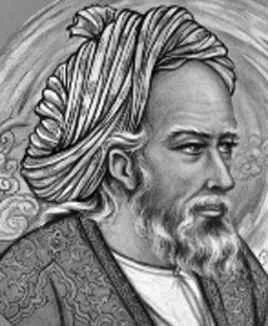
Omar Khayyam is the rare poet who was also one of the great scientists of his age. Historically celebrated as a mathematician and astronomer, he became, through a Victorian translator, the poet of the passing moment for generations of English-speaking readers, giving the Western world the unforgettable image of the Moving Finger that writes and moves on—an image that found its way into my own poem, Gather.
He is my favourite figure of the Islamic Golden Age—perhaps because we share a first name, but more because we share a love of science, poetry and philosophy, and a desire to explore our faith beyond inherited certainties.
Born in Nishapur, in Khorasan, in 1048, he made pioneering contributions to algebra and helped develop the remarkably accurate Jalali calendar. Few people have possessed such range: studying the movements of the heavens while questioning the meaning of the life unfolding beneath them.
His poetic fame rests on the Rubaiyat—four-line poems on time, fate, doubt and the pleasure of the present moment. Khayyam is, for me, the master of the four-line stanza, holding a lifetime’s uncertainty within a few brief lines. The authorship of individual quatrains remains uncertain after centuries of transmission. These verses read like intimate philosophical reflections, reminding me of Marcus Aurelius’s Meditations: a conversation with oneself that finds listeners across centuries.
Wine flows through this poetry alongside philosophy and religion. The man whose verses questioned religious certainties also wrote theological and philosophical treatises on God, free will and human obligation. That breadth draws me to him: a thinker willing to examine faith through reason, and a poetic voice willing to question what others confidently proclaim.
To me, his cup holds something of life itself: sweetness briefly offered, joy shadowed by its ending. A book of verses, bread, wine and a companion beneath a bough become enough to make an uncertain world feel complete. Yet his questioning touches the borders of blasphemy before returning to a search for the same God:
Yazdan cho gel-e vojud-e ma ra arast
Danest ze fe‘l-e ma che khahad barkhast
Bi hokmash nist har gonahi ke marast
Pas sukhtan-e qiyamat az bahr-e che khastWhen Allah mixed my clay, He knew full well
My future acts, and could each one foretell;
Without His will no act of mine was wrought;
Is it then just to punish me in Hell?
Then the voice that challenges also longs for His presence, even in the tavern:
Ba to be kharabat agar guyam raz
Beh zan-ke konam bi to be mehrab namaz
Ey avval o akhar-e hame khalqan to
Khahi to mara besuz o khahi benavazTo share my secrets with You in the tavern
Is better than prayer without You at the altar.
You, the first and last of all creation—
Burn me if You will, or cherish me.
This tension reminds me of Iqbal addressing God with startling familiarity in Shikwa, even calling Him harjai—an unfaithful beloved—before imagining His answer in Jawab-e-Shikwa: “Hum to mail-ba-karam hain, koi sail hi nahin”—“We are inclined to generosity, but there is no one asking.” Complaint becomes a conversation in which humanity, too, must answer.
What draws me to these poets is their willingness to let faith, doubt and longing inhabit the same verse.
Omar Khayyam’s name has travelled almost as widely as his poetry: from a nightclub in London to Khayyam University in Mashhad, Iran, from a statue at the University of Oklahoma to a crater on the Moon and an asteroid. Few lives leave their mark on places of learning, earthly pleasure and the heavens alike.
For me, his contribution was to bring a scientist’s questioning honesty to poetry. In four short lines, he could hold wonder, scepticism and joy together. He is at number five because he was primarily a scientist and philosopher, with his poetic legacy resting on the quatrains collected as the Rubaiyat, known to much of the world through FitzGerald’s English adaptation. But few poets have said so much in so little space, and his Moving Finger continues to inspire me to write.
4. Saadi Shirazic. 1210 – c. 1291
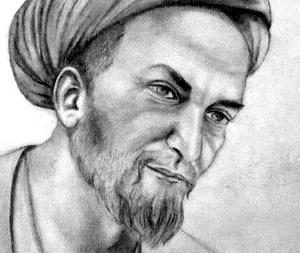
Saadi is the wise teacher of Persian literature, but wisdom is only part of his appeal. He is also a poet of love, a storyteller and a keen observer of human contradictions: how generosity can live beside vanity, faith beside hypocrisy, and wisdom beside folly.
Born in Shiraz around 1210, he studied at Baghdad’s Nizamiyya college before spending many years travelling. His stories move among scholars, merchants, rulers and beggars, although their first-person adventures should not all be read as autobiography. He returned to Shiraz and completed Bustan in 1257 and Gulistan the following year. His enduring achievements lay in poetry, storytelling and the understanding of human nature: questioning how people behave and finding words that might help them live better.
Bustan (The Orchard), written in verse, and Gulistan (The Rose Garden), in prose interwoven with poetry, turn brief encounters into reflections on justice, generosity, humility and the uses of power. Saadi rarely needs a grand event to reveal something important. A ruler’s remark, a beggar’s reply or a scholar’s vanity can become an entire lesson. His wit gives those lessons life: the reader comes for a story and leaves with an uncomfortable recognition. Gulistan became a model of Persian prose and a familiar teaching text across generations.
Yet the teacher was also a lover. His ghazals explore longing, separation, beauty and the surrender of pride before the beloved. Their language can seem almost conversational, while its rhythm and precision make that apparent simplicity extraordinarily difficult to imitate. Saadi can speak with the authority of someone who understands life, then with the helplessness of someone overcome by love. Alongside Hafez, he stands among Persian’s greatest masters of the ghazal.
His most famous lines express the unity of humankind:
Bani Adam a’zaye yek digarand
Ke dar afarinesh ze yek gowharandThe children of Adam are limbs of one body,
Created from a single essence.
The poem continues: when one limb suffers, the others cannot rest; indifference to another’s pain calls our very humanity into question. Here, compassion becomes more than kindness. It becomes an acknowledgement that another person’s suffering concerns us, however distant their life may seem.
What makes Saadi distinctive is the meeting of tenderness and judgement. He recognises human weakness without surrendering his expectations of humanity. His humour exposes pretension; his compassion asks us to look more carefully at those whom power overlooks. He writes about love in its many forms—from desire and friendship to devotion and responsibility towards others.
He is at number four in my personal ranking, a position that may say more about my limited understanding of Persian poetry than about his stature. Few writers have joined poetry, storytelling and moral insight so gracefully. Where other poets lead me towards the mysteries of existence, Saadi brings me back to the person standing before me—and asks how I intend to treat them.
3. Ferdowsic. 940 – c. 1020
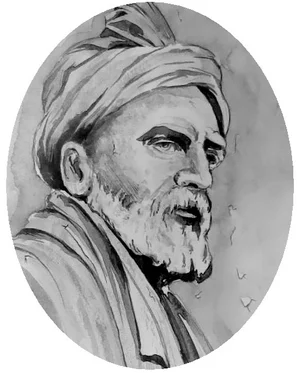
Ferdowsi gave Persian literature an enduring foundation—and gave me my favourite childhood tale, Rostam and Sohrab. Carried into Urdu, its heroes stepped out of ancient Persia and into our schooldays in Pakistan, where so many boys imagined themselves possessing Rostam’s strength or Sohrab’s fearless youth. I was one of them: drawn first to the glory of their courage, only later to the sorrow of a father and son who discover each other too late.
Three centuries after the Arab conquest of Persia, Ferdowsi devoted more than thirty years to telling the stories of Iran’s kings and heroes in Persian, giving a civilisation a language in which to remember itself.
Born around 940 near Tus, in Khorasan, he belonged to the dehqans, landowning families who preserved the traditions of pre-Islamic Iran. Drawing on earlier chronicles and inherited stories, he completed the Shahnameh (The Book of Kings) in 1010.
Its roughly 50,000 couplets move from the mythical beginnings of the world to the fall of the Sasanian empire. Battles and monsters share its pages with love, betrayal and the grief of parents and children. What makes Ferdowsi extraordinary is that greatness offers no protection from human failure: courage can coexist with blindness, and loyalty can lead to ruin.
Rostam’s tragedy holds that tension at its most painful. He unknowingly fights and fatally wounds Sohrab, discovering only afterwards that the young warrior is his son. Strength cannot save him from ignorance, and recognition cannot undo what has been done. The hero who can overcome almost anyone cannot escape the consequences of failing to recognise the person before him.
Ferdowsi honours courage, but also wisdom, restraint and justice. His love for Iran does not prevent him from exposing the failures of its rulers. Preserving a civilisation’s memory also means remembering where it went wrong.
A couplet widely attributed to him captures that achievement:
Bas ranj bordam dar in sal-e si
Ajam zende kardam bedin ParsiMuch have I suffered in these thirty years,
But I have brought the Persians back to life with this Persian.
He is at number three because I return more often to the intimacy of the two poets above him. Yet his vast epic holds sorrows close to home, and its heroes have accompanied me since childhood.
2. Rumi30 September 1207 – 17 December 1273
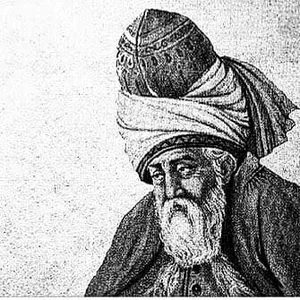
Rumi is the poet of the soul’s longing for God. Eight centuries after his death, he is read and quoted from Konya to California, and often celebrated as America’s best-selling poet—a remarkable journey for a medieval Muslim scholar whose verses were born of devotion.
Alongside Omar Khayyam, he is the poet on this list whom I feel I understand best: Khayyam through his science and the English Rubaiyat, Rumi through Iqbal and my own interest in Sufism. For me, Rumi stands at the pinnacle of Sufism, giving language to the longing that lies beneath our arguments about faith.
Jalal al-Din Muhammad was born in 1207, traditionally associated with Balkh, though modern scholarship points to Wakhsh in present-day Tajikistan. His family moved west and eventually settled in Konya, in Anatolia—then known as Rum, the land of the Romans—which gave him the name Rumi. He became a respected religious scholar and teacher before meeting Shams of Tabriz in 1244. Their intense companionship transformed his spiritual life; Shams’s disappearance left a longing that poured into poetry.
His Divan-e Shams-e Tabrizi gathers lyric poems in his companion’s name. His Masnavi, a six-book spiritual work of stories and reflections, begins with a reed flute lamenting its separation from the reed bed:
Beshnow in ney chon shekayat mikonad
Az jodayiha hekayat mikonadListen to the reed, how it complains,
Telling the tale of separations.
That separation becomes an image of the soul’s distance from its source. Rumi finds spiritual meaning in familiar things: a flute, a marketplace, a friendship, the ache of missing someone. Love is both the wound and the movement towards healing. His poetry can be playful, humorous and startlingly intimate, even while asking the largest questions of existence.
Iqbal helps me hear that voice. Across his own intellectual explorations, he repeatedly returned to Rumi as his spiritual master. In Javid Nama (The Book of Eternity), published in 1932, he made Rumi his guide through the heavens, placing their conversations at the heart of a journey through philosophy, faith and humanity’s future. For a reader approaching Persian through Urdu, Iqbal becomes a bridge to Rumi—and Rumi opens a world beyond it. Elsewhere, Iqbal names that allegiance plainly:
Pir-e Rumi, murshid-e rowshan-zamir
Karavan-e ishq-o masti ra amirRumi, the master of illuminated heart,
Leader of the caravan of love and ecstasy.
His influence is too wide to catalogue here. In Konya, a monument commemorates his meeting with Shams as the “Union of Two Seas”; each December, Şeb-i Arûs, the “Night of Reunion,” remembers his death as a return to the Divine through the whirling Sema ceremony. Beyond Turkey, his words travel through museum exhibitions, Pakistan’s Sufi rock and immersive performances in American planetariums. The forms change, but the longing remains recognisable: verses written centuries ago finding another voice, another stage and another listener. To me, Rumi is arguably the most global of poets, his words finding a home far beyond the language and faith in which they were born.
He is at number two because I find both guidance and companionship in his poetry. Rumi often leads me towards an answer; the poet above him leaves me with a question. Yet few poets make the search itself feel so alive—or turn longing into such an enduring invitation.
1. Hafezc. 1315 – 1390
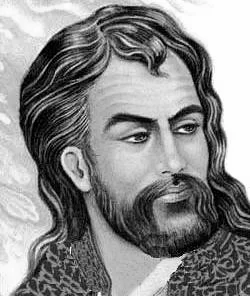
Hafez is the supreme master of the ghazal, the form that Mir and Ghalib would carry into Urdu centuries later. His Divan is a familiar presence in Iranian homes, read for pleasure and consolation, and opened at random for guidance—a practice called fal-e Hafez.
Born in Shiraz around 1315, Khwaja Shams al-Din Muhammad spent most of his life there. His pen name, Hafez, signifies someone who has memorised the Quran. He lived through changing rulers and uncertain fortunes, but much of his biography remains obscure. His lasting achievement is literary: roughly five hundred ghazals that made the possibilities of a short poem seem almost limitless.
Wine, gardens, nightingales and the beloved fill his poetry, carrying meanings that shift with the reader. Love may be earthly or divine; the cup may hold wine or spiritual intoxication. His wordplay allows several interpretations to coexist, making each return to a poem a different encounter.
That ambiguity rests on extraordinary precision. A single word can suggest desire and devotion, freedom and transgression. The couplets need not follow a story in sequence; they gather meaning through echoes, contrasts and changes of mood. What first seems a beautiful fragment can reveal another layer when read beside the lines surrounding it.
Beneath that beauty runs a sharp wit aimed at hypocrisy. The tavern may offer greater honesty than the pulpit, and the imperfect lover more sincerity than the self-satisfied preacher. Hafez questions those who claim authority over others’ souls while refusing to examine their own.
One of his recurring figures is the rend: an unconventional lover who refuses the pretence of respectability. Neither easily dismissed as a sinner nor comfortably accepted as a saint, this figure unsettles the boundaries by which society judges people. In Hafez’s world, an admission of human weakness can carry more truth than a public performance of virtue.
One of his most famous couplets makes an extravagant promise:
Agar an Tork-e Shirazi be dast arad del-e ma ra
Be khal-e hendoyash bakhsham Samarqand o Bokhara raIf that Shirazi beauty would take my heart in hand,
For the mole on that cheek I would give Samarkand and Bukhara.
Two magnificent cities offered for a single mark of beauty: love overturning the world’s measures of value. His influence travelled far beyond Persia; Goethe answered him with the West–Eastern Divan, while generations have quoted, sung and lived with his verses.
He is at number one for the same reason Ghalib leads my Urdu list: he leaves the question open. With my limited Persian, I cannot claim to hear every nuance, but that openness is what draws me back. Hafez allows faith and doubt, pleasure and longing, to inhabit the same few lines. Every reader finds room for a life the poet could never have known. For me, no poet makes ambiguity more beautiful—or uncertainty feel so much like companionship.